
Choosing pharmacy shelving is not simply a matter of finding enough shelves to hold medicines. A well‑designed hospital pharmacy storage system should help pharmacists store more medicines within a limited area, locate products quickly, replenish stock efficiently and maintain an organized dispensing workflow.
For hospitals planning a new pharmacy or renovating an existing one, the following factors should be considered.
1. Start with the Pharmacy Workflow, Not the Shelving
Before selecting a shelving system, understand how medicines move through the pharmacy. Frequently used medicines should normally be located within the easiest reach zone, while less frequently accessed products can be placed at higher or lower levels. A good pharmacy shelving layout therefore starts with workflow planning rather than simply filling every wall with racks.
- Where medicines are received and unpacked
- How products are classified and stored
- Where pharmacists pick medicines
- How frequently each category is accessed
- How stock is replenished
- Which medicines require higher accessibility
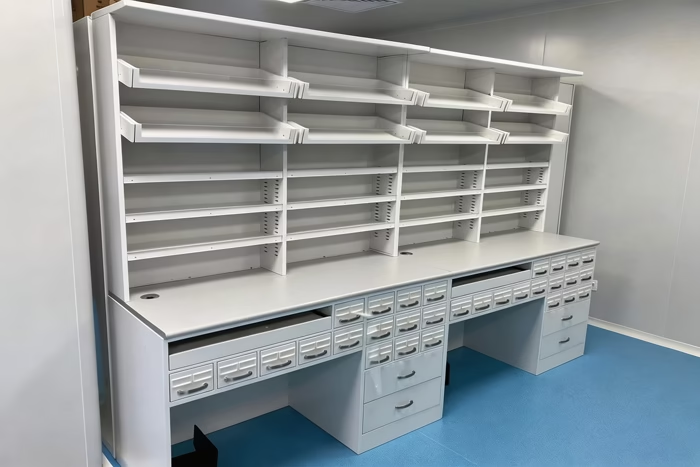
2. Compare Storage Capacity, Not Just External Dimensions
Two pharmacy shelving systems with similar dimensions can provide very different storage capacities. Traditional shelving often relies primarily on horizontal shelves, while a specialized pharmacy storage system can combine adjustable shelves, medicine trays, pull‑out trays, angled trays and lower storage drawers. When comparing systems, ask how much usable medicine storage a unit actually provides rather than simply how large it is.
3. Choose Adjustable Storage for Different Medicine Sizes
Medicine packaging varies considerably. Adjustable dividers and configurable medicine trays allow the internal storage area to be divided according to actual package size. This is particularly useful when medicine categories or packaging change over time.
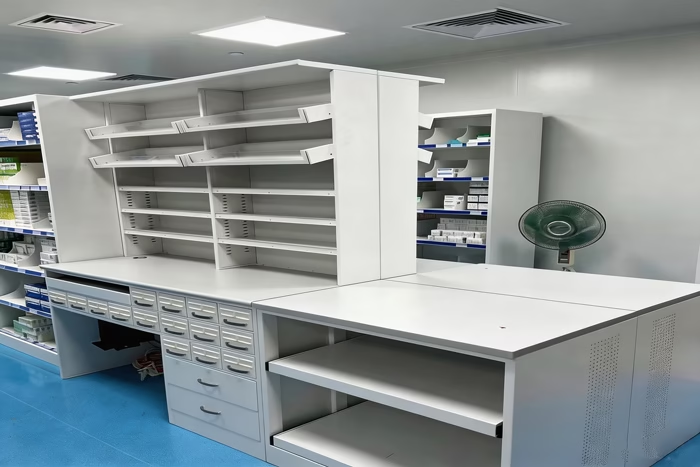
4. Consider Flat and Angled Medicine Trays
Not every storage level needs the same configuration. Flat trays can provide convenient access around the pharmacist’s normal line of sight. For higher positions, angled pharmacy trays can make products easier to see and retrieve. Depending on the tray design, products can also move toward the front as front items are removed, supporting more orderly stock rotation.
5. Evaluate Pull‑Out Accessibility
Deep storage increases capacity, but it can make medicines at the rear difficult to reach. Pull‑out medicine trays allow the storage compartment to extend toward the user and are particularly useful for deep shelving, high‑density medicine storage and frequently replenished stock. Slide mechanism, load capacity, stability and long‑term durability should also be evaluated.
6. Think About FIFO and Stock Rotation
For many pharmacy storage applications, stock rotation is an important part of daily management. An appropriate tray arrangement can make replenishment from the rear and picking from the front easier. Depending on the hospital’s medicine‑management procedure, this can support FIFO — First In, First Out — workflows and reduce unnecessary handling.
7. Do Not Ignore Ergonomics
A pharmacy shelving system is used repeatedly throughout the working day. Poorly positioned storage can result in excessive reaching, bending, searching and walking. The goal is not simply maximum storage density, but the right balance between storage capacity, visibility, accessibility and workflow efficiency.
8. Consider Modular Design and Future Expansion
Hospital pharmacy requirements change over time. A modular pharmacy shelving system makes it easier to add units, reconfigure internal trays, change compartment sizes, modify layouts and expand the pharmacy in stages. This can be especially valuable in renovation projects where space is limited.
9. Check Material and Construction Quality
Pharmacy shelving is used intensively, so structural quality matters. Evaluate cabinet and frame material, surface finish, shelf and tray load capacity, slide quality, divider durability, stability, ease of cleaning and replaceability of components. The cheapest shelving system is not necessarily the lowest‑cost solution over its full service life.
Conclusion
The right pharmacy shelving system should do more than store medicines. It should increase storage capacity, improve medicine visibility, simplify picking and replenishment, support stock rotation and adapt to future requirements. For a new hospital pharmacy or renovation project, shelving selection should therefore be considered together with the overall pharmacy layout and workflow.
Planning a Hospital Pharmacy? We provide modular pharmacy storage solutions with adjustable shelving, medicine trays, pull‑out storage and configurable layouts for different hospital pharmacy requirements. Contact Us for a Pharmacy Storage Layout
Related reading:
تخزين الأدوية
أثاث مستشفى
Contact Us