
Medical Furniture & Storage Solution
Product and Overall Solution Provider

Home > mobile shelving > The Ultimate Guide to Compact Mobile Shelving: Revolutionizing Storage in Modern Healthcare
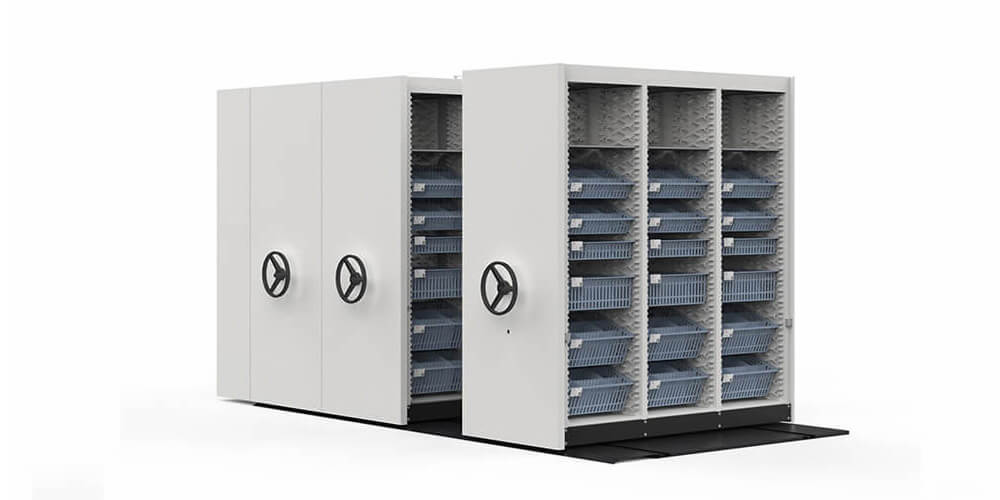
Problem: 81% of hospitals struggle with medical equipment disorganization, leading to 32-minute daily staff search times (2025 Healthcare Logistics Report).
“Finding critical records during emergencies felt like searching for needles in a haystack. Now? 18 seconds.”
— Dr. Elena Rodriguez, St. Mary’s Hospital, Miami
Solution: Compact mobile shelving systems collapse wasted aisles, converting 1,500 sq. ft. of conventional storage into just 375 sq. ft.
#1 Space Optimization: Turning 4 Aisles into 1
90% Reduced Aisle Space: Dual-axis rails create single-access pathways.
Adjustable Bay Capacity: Customize units for medication carts or IV pole storage.
Case Study: Tampa General Hospital saved $48,000/year in real estate costs after installing Sentor Medical Compact Shelving.
#2 Enhanced Workflow Efficiency
RFID Smart Tracking: Reduces equipment retrieval time by 73% (Journal of Healthcare Engineering, 2024).
One-Touch Mobility: Locking casters withstand 2,500 lbs loads with 5° floor tilt tolerance.
Critical Technical Specs When Choosing Compact Mobile Shelving
Structural Durability Standards
Parameter | Industrial Grade | Medical Grade |
Load Capacity | 1,200 lbs/section | 1,800 lbs/section |
Corrosion Resistance | IP43 | IP65 (Sealed Against Disinfectants) |
Operational Cycles | 50,000 | 250,000+ |
Compliance & Safety (Key for UK/EU Medical Buyers)
CE EN 14056: Laboratory furniture noise/vibration control
ISO 13485: Medical device quality management
FDA 21 CFR Part 1020.40: Radiation-shielded variants
Pharmacy Inventory Solutions
Climate-Controlled Units: 2°C-8°C temperature stability for biologics
Narcotics Cabinets: Biometric access + automated dispensing logs
EMR Hybrid Storage Systems
Atlanta-based PeakArchive combines physical files with barcode-to-EHRscanning (cuts record retrieval to <45 seconds)
Houston Methodist Case Study: Investment vs Savings
Capital Outlay: $640,000 for Sentor high-density system
Annual Savings
$310,000 reduced offsite storage fees
$850/hr surgical efficiency gains (fewer delays)
17% decrease in lost-equipment replacement costs
#1 Ignoring Load-Bearing Floor Requirements
“We reinforced subfloors post-installation—cost doubled. Get structural audits first.”— Vincent Cole, NHS Facilities Planner
#2 Overlooking Future Expansion
Modular rails must allow 25% capacity expansion
#3 Cheap Motors = $9,800/Hour Downtime
Select motors with ≥100,000 cycle MTBF (mean time between failures)
Predictive Restocking
“Sensors now auto-order bandages when stock dips below threshold. No more midnight supply runs.”— Sentor SmartShelve User, Berlin
Disinfection Compliance
UV-C light bars reduce surface pathogens by 99.3% between shifts (The Lancet, Jan 2025)
Step 1: Audit current space waste using DensityCalc Pro software (free trial)
Step 2: Request onsite assessment from medical-grade specialists like Sentor or Spacesaver
Step 3: Pilot a Radiology Compact Shelving Unit in high-traffic zones
Final Insight: Per 2025 AHA data, hospitals using optimized compact mobile shelving cut patient wait times by 22% and storage costs by 61%. Don’t let inefficient storage drain resources—act now.